
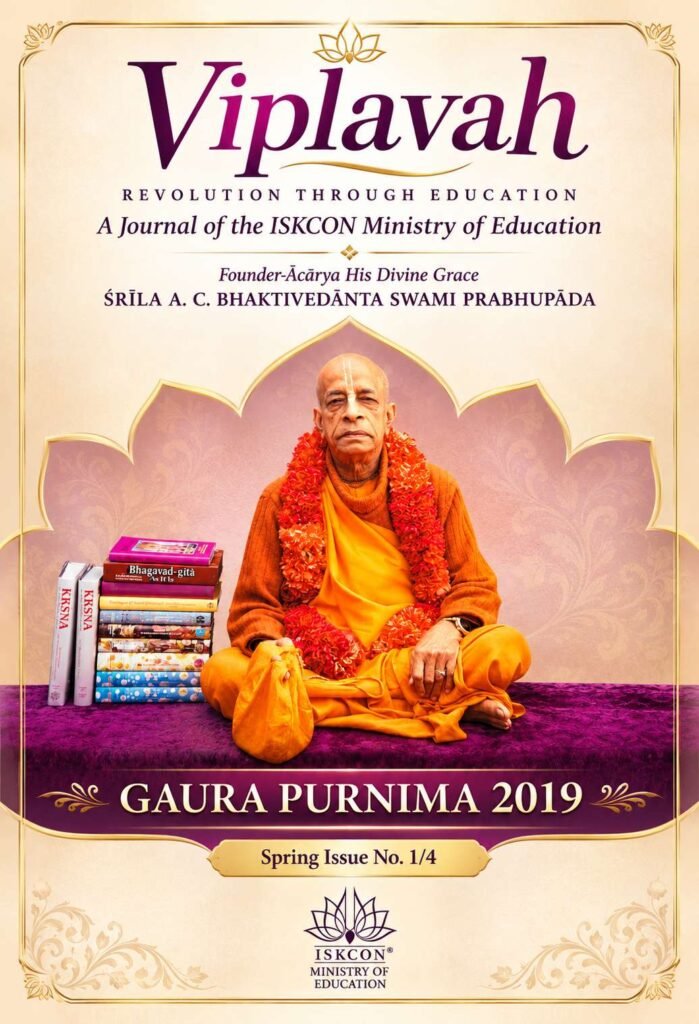
Book Text


Revolution Through Education
Founder-Acharya His Divine Grace Srila A. C. Bhaktivedanta Swami Prabhupada
GAURA PURNIMA 2019
Spring Issue No. 1/4

CONTENTS
VISION STATEMENT
MISSION STATEMENT
MASTHEAD
MESSAGE FROM THE ACTING-EDITOR
ANNUAL FINANCIAL REPORT
MOE INTERNATIONAL EDUCATIONAL SYMPOSIUM
25–27 FEB, SRIDHAM MAYAPUR ISKCON SASTRIC DEGREES SYMPOSIUM
ISKCON MINISTRY OF EDUCATION’S TECHNOLOGY PLATFORM
CALL FOR PAPERS – ISKCON PHILOSOPHY OF EDUCATION BOOK
Background
Project Schedule
Terms of reference.
Aims of ISKCON Educational System
Request for Participation
BHAKTIVEDANTA MEDICAL ASSOCIATION HOLDS 5TH ANNUAL CONFERENCE
NORTH AMERICAN REGIONAL REPRESENTATIVE REPORT
A HIDDEN GEM IN YOUR COMMUNITY:
CALENDAR OF EVENTS
NEXT ISSUE



VISION STATEMENT
To provide Krishna conscious education of high quality to everyone through temples, educational institutions and various global initiatives.


MISSION STATEMENT
To develop comprehensive educational systems globally, that foster higher spiritual values, fulfil the needs of ISKCON members and the larger society bringing about excellence in all areas of human life. We aim to fulfil this mission by:
- Empowering and supporting educational initiatives and collaborations among educators, educational institutions and professionals
- Establishing and monitoring high standards of Vaisnava education
- Supervising the development and execution of educational plans and ensuring that they are delivered to high standards
- Understanding and fulfilling the educational needs of Krsna conscious families
- Making every temple as an educational centre and a centre of excellence.


MASTHEAD
Viplavah is a Journal of the Ministry of Education of the International Society for Krishna Consciousness, Founder Acharya His Divine Grace Srila A. C. Bhaktivedanta Swami Prabhupada.
Minister of Education: Sesa Das
Executive Director: Tapana Mishra Das
Core Committee: Hanumatpresaka Swami, Sesa Das, Atul-krsna Das,
Rama-giridhari Das, Tapana Mishra Das, Champaka-lata Devi Dasi, Indira-sakhi Devi Dasi,
Acting Editor: Hanumatpresaka Swami
Editorial Board: • Indira-sakhi Devi Dasi, Gopika Radhika Devi Dasi.
The first issue of the Journal was published Janmastami 2017 with plans to publish four issues each year. It is driven out of North American and the Western Hemisphere but is aimed at serving the educational needs of ISKCON globally. We hope it inspires many regional and topical journals, such as Jayam which is now being published in Spanish.
Ministry Web Site: https://iskconeducation.org/
For Correspondence: viplavah.iskcon@gmail.com

MESSAGE FROM THE ACTING-EDITOR
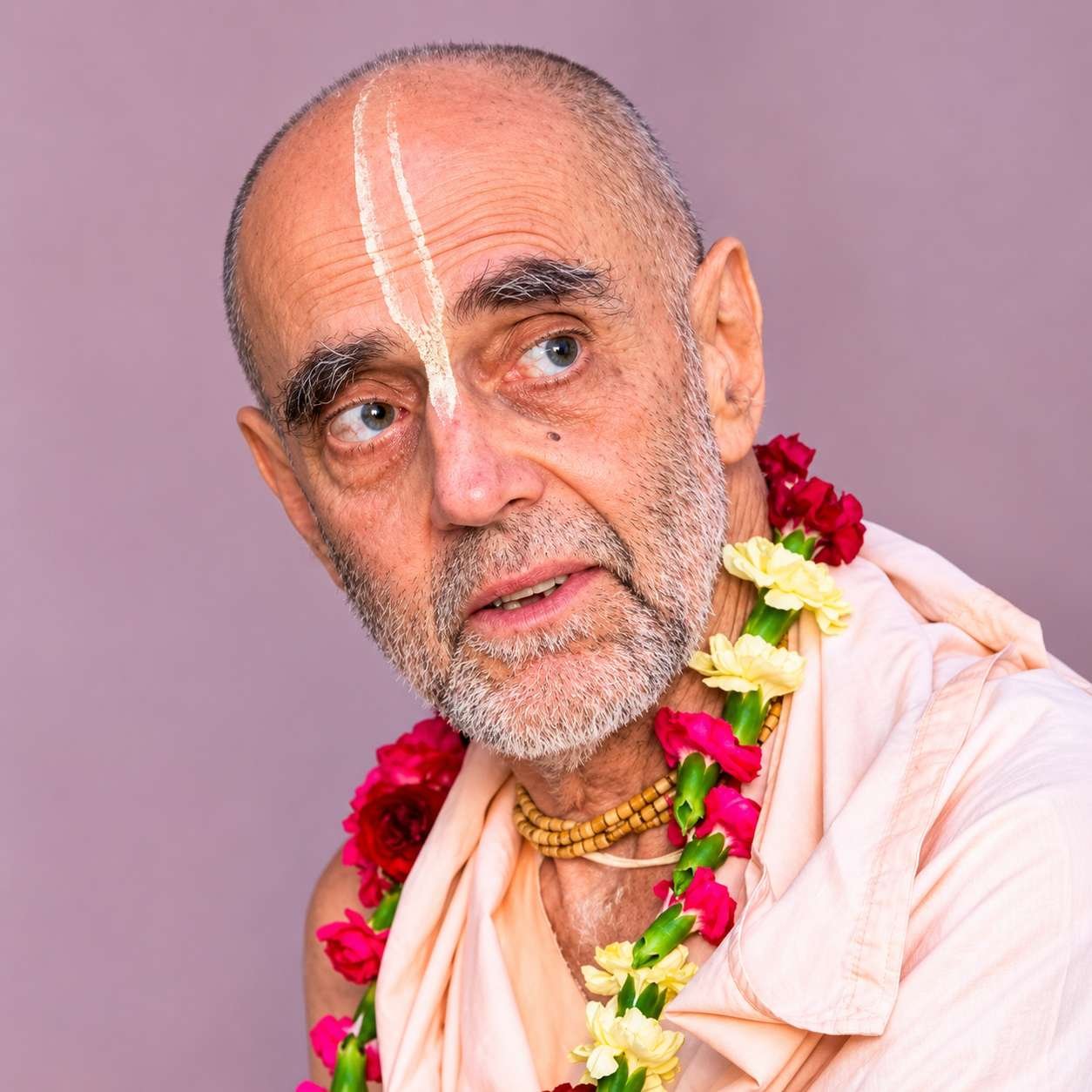
By Hanumatpresaka Swami
Here is Viplavah 2019-1. The content is great. Could be greater. Is there anything else more important in ISKCON than its Ministry of Education? Please take charge, contribute to this essential Sankirtan.
Personally, we, Hanumatpresaka Swami, traveled with a great focus on Ministry work through Houston, Texas and then India. In Houston we touched bases with our Sastric Educators – H. G. Radha Krsna Das and Hari-lila Das, and Srivasa Pandita Das and Bali-mardana Das from Iskcon Silicon Valley by telephone. Then impelled by their instructions we headed East.
In Navi Mumbai, Rama-giri-dhari Das continues with his Sanskrita Centric Education and Goloka Education primary school initiatives. Heading North to Surat we visited Atmarama and Mataji’s primary school. It now has 150-students though at its height 400. It is now becoming more involved as an official ISKCON center.
South to Wada and Govardhana Eco-Village and the Vidya-pitha with Gauranga Darshana Das and even H. H. Radhanatha Swami. They have a powerful Sastric Education program which is residential for two years, covers from Bhakti-vaibhava to Bhakti-sarva-bhauma, by study of) one chapter a day. The program retains 90% of the students through the entire program and we are looking to integrate with it for Sastric Studies in North America.
Back into the aluminum wiener and a one night program in Kolkata with the Bagh-bazaar Gaudiya Matha on its 100th Anniversary. Several ISKCON scholars joined.
Pune – An article about that meeting follows by Atul Krsna Das. We can add that we were amazed at the level of devotional, intellectual and professional maturity of the participants. Dozens of aims for the Four Diploma Program were shifted and combined over several days. It looks simple in the end but that took a lot of head-ache.
Then teaching a Bhakti-vaibhava course at the VIHE in Vrndavana and on to Mayapura for the Ministry, India and International Symposium. We include a report of this from Indira-sakhi Devi Dasi and Prabhavi Gopi Devi Dasi. We saw enormous programs developing from India to Russia.
The SGGS (Sannyasi Guru GBC Sanga) met with participation from top leaders such as H. H. Radhanatha Swami, Gopal-Krsna Goswami et al. There were about 70 participants daily. Several very important topics were addressed and work teams rotated twice a day giving us a chance to contact many of our peers in never before possible fashion. We saw many areas where we have to learn and many areas where we feel we have excellent ideas to offer.
Of course, we have also been doing work for our own educational, Sankirtan, institution, NIOS, but all in all, ISKCON is alive educationally and integration of work force stands as a great challenge. Many hairs make a rope.
ANNUAL FINANCIAL REPORT
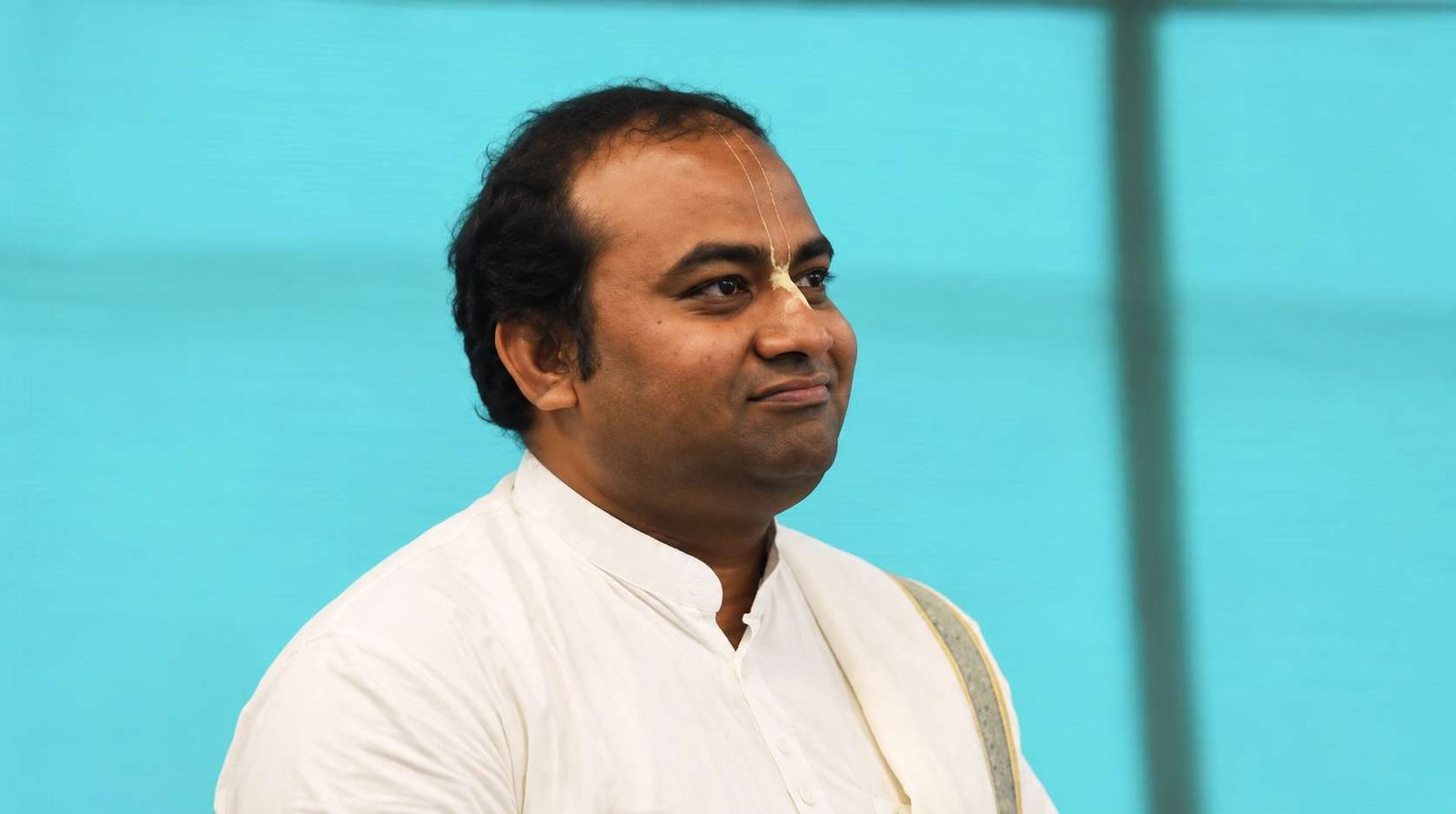
By Rama-giri-dhari Das
The following is the annual financial report from the Ministry of Education. This is for the period April 2018 to March 2019.
RECEIPTS
- Starting Balance (as on 1st Apr ’18) – USD 6300 /- (carry forward from the previous year budget)
- Funds received from GBC Treasury on 8th May, 2018) – USD 923 /- (from 2018 -19 budget)
- Funds received from GBC Treasury on 28th May, 2018) – USD 4615 /- (from 2018 -19 budget)
- Funds received from GBC Treasury on 18th Sep, 2018) – USD 615 /- (from 2018 -19 budget)
- In Kind contribution from MoE Executive Committee members – USD 7500 /-
EXPENSES
- International Education Conference in Mayapur USD 4615 /-
- North American Education Conference In Alachua USD 169 /-
- MoE office expenses USD 1846 /-
- MoE Website Development USD 770 /-
- Viplavah Design (Layout) USD 500/-
- Shifting the MoE web server & domain name USD 200 /-
- Travel Sponsored and undertaken by MoE EC USD 7500/-
NOTE: The Ministry of Education has undertaken lots of new initiatives and projects to be executed in the year 2019 – 20. Please feel free to contact us at viplavah.iskcon@gmail.com if you are interested in helping our Ministry with raising funds for various projects or supporting a specific project.


MOE INTERNATIONAL EDUCATIONAL SYMPOSIUM
(25th – 27th Feb, Sridham Mayapur)
By Indira-sakhi Devi Dasi and Prabhavi Gopi Devi Dasi

International Educational Symposium, organized by ISKCON’s Ministry of Education, was conducted from 25th to 27th February at Namahatta Bhavan in Sridham Mayapur. As the name implies, the symposium was yet another brick for viplavah, building a revolution in the educational atmosphere within ISKCON. As a movement serving society by bringing about a revolution in the impious lives of this world’s misdirected civilization we need to invest more time and resources into education as a means of empowering ourselves. This was the main focus of the symposium.
ISKCON has gone ahead with many potent preaching activities but has education kept pace? Clearly, our Founder Acarya wanted education as a strong, integrated, global aspect of our society. Srila Prabhupada was particular that devotees find time to read his books, he supervised opening of schools, made ambitious plans for establishing universities and encouraged devotees to study and teach systematically. This three day symposium brought together wonderful educators from 18 different countries to work out ways and means to fulfil Srila Prabhupada’s vision for education in ISKCON. More than 150 devotees were physically present and many more joined online as it was being streamed by Mayapur TV.
DAY 1 (25th Feb)
Day 1 (25th) of the symposium was dedicated to ISKCON India’s educational initiatives. This started with an auspicious inaugural address by H.G. Basu Ghosh Prabhu, ISKCON India Bureau, Vice-Chairperson. Basu Ghosh Prabhu emphasized the need for reviving the traditional method of education, particularly in India, and recommended that Sanskrit be taught as a primary language. The stage was also graced by H.G. Sesa Prabhu, GBC Minister of Education, overseeing the Ministries work, and by H.H. Hanumatpresaka Swami, a member of the Executive Committee of the Ministry. Maharaja pointed out that universities are there to teach the teachers, and that each one of us who is learning has an obligation to teach. He inspired the Indian educators to consider that they should broaden their scope and teach the Westerners as Srila Prabhupada did: pāścātya-deśa-tāriṇe.
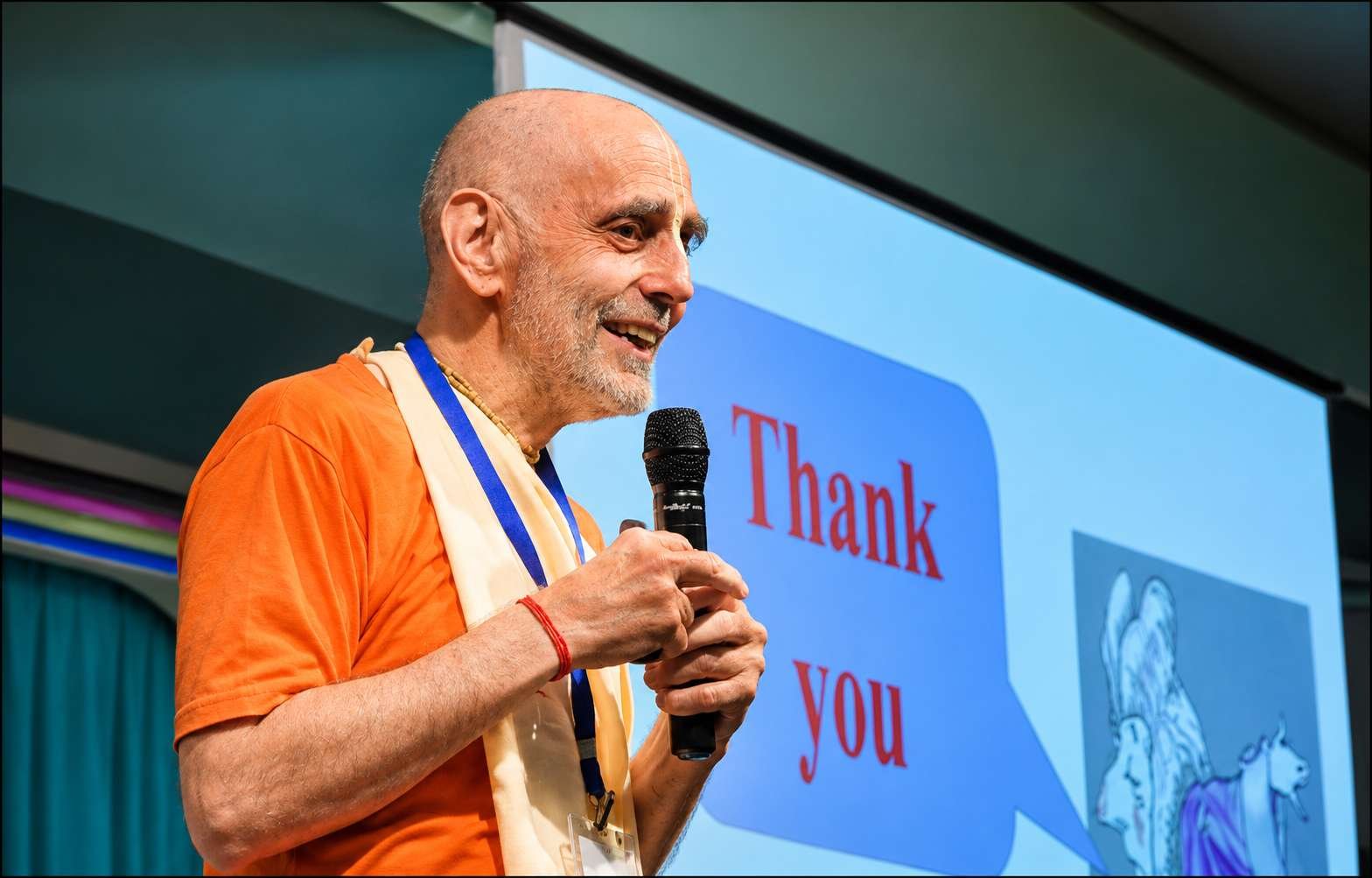
Sessions started with a presentation, Cooperation for Transformation: A Bundle of Sticks by H.G. Tapana Mishra Das, Executive Director of the Ministry. Prabhu highlighted that even though there are many educational projects within ISKCON which are doing brilliantly in their individual capacity, collectively it was not possible to find the pulse of education in ISKCON. He appealed to the educators that their cooperation was imperative for knowledge-sharing to advance the cause of education. He pointed out that educators should not hold their resources without sharing them as all ISKCON programs ultimately come from the same source – the teachings and books of His Divine Grace A. C. Bhaktivedanta Swami Prabhupada.
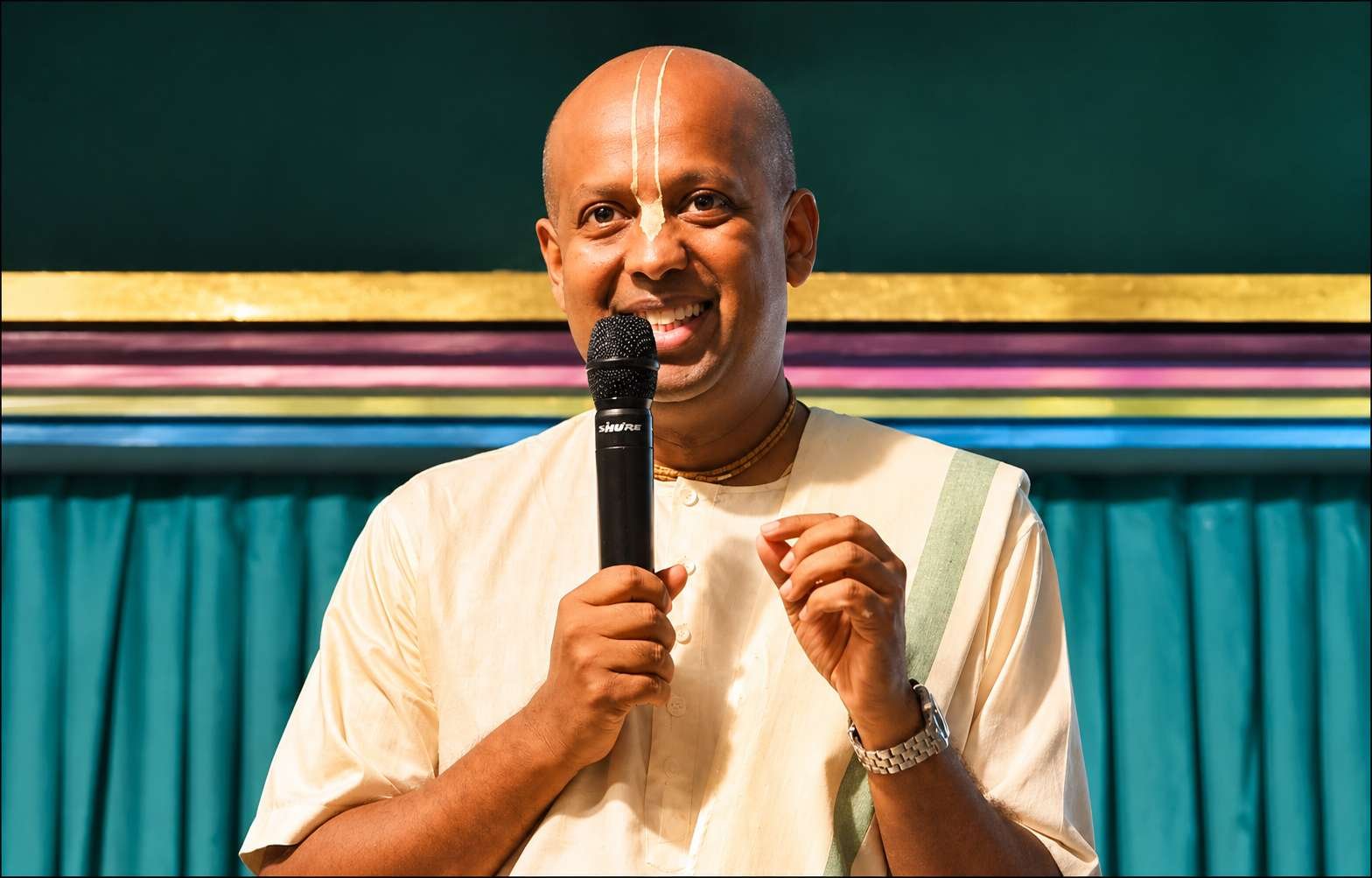
In order to translate the enthusiasm of the gathered educators into immediate practical action, teams were formed according to the individual’s interests in: Setting up universities within ISKCON, Sunday Schools, Sastric studies, Value education, and ISKCON schools including Gurukulas. Each group was required to come up with an action plan and rough timelines for the first phase of their project.
In the afternoon session each of the teams gave a presentation about their project based on the following points – what is the vision of the project, who will be overall coordinator for the project, who are the team members, what will be the method of communication within the team (for the next two days and subsequently over the next year with devotees going back to their congregations and temples), what specific outcomes will the team deliver in the next six months and what is the general timeline of their project.
The entire exercise was designed to enable devotees from different geographical locations to collaborate and work together. In this way the symposium was not just a “meet and greet” event, but pushed us to take concrete, measurable steps towards improving education within ISKCON.
DAY 2 & 3 (26th & 27th Feb)
Days 2 & 3 was for discussion of initiatives in ISKCON internationally. In these two days the devotees had an opportunity to participate in more than twenty presentations given by seasoned educators on topics as diverse as philosophy of education, varnasrama education, sastric degrees, tertiary education, and online education. Presenters conformed admirably to 20-minutes of delivery and 10-minutes of questions and answers. This TED-talk type of a format kept the audience riveted and allowed the educators to have effective time to discuss their initiatives and their challenges.
Day 2’s Keynote Address was by H.G. Sesa Das. Prabhu emphasized that a major role of education would be in succession planning within ISKCON. Educated devotees who have the reasoning and analytical skills granted to them by education would be needed to take over the management of ISKCON. Prabhu also launched the revamped web platform of the Ministry which may be access ed at https://iskconeducation.org.

Presentations started with H.H. Yadunandana Swami speaking on ISKCON’s Philosophies of Education. Maharaja stressed that a philosophy of education must be established as a foundation of all educational projects and that while we may have some diversity in philosophies of education, they must all have consistency and agreement at a fundamental level.
H.G. Pranav Prabhu, Ph.D. scholar with the Bhaktivedanta Research Center in Kolkata, gave an intriguing presentation, The Gaudiya Vaishnava Culture of Study and Practice Through Academics, taking a bird’s eye view of the Gaudiya Vaishnava community. He humorously commented that when someone sits down to study we shouldn’t be exasperated and say, “Why don’t you do something practical?” It is practical – you just can’t see the results immediately. He concluded by appealing to all Temple Presidents and GBC Secretaries, “Please, please give support to Education”.
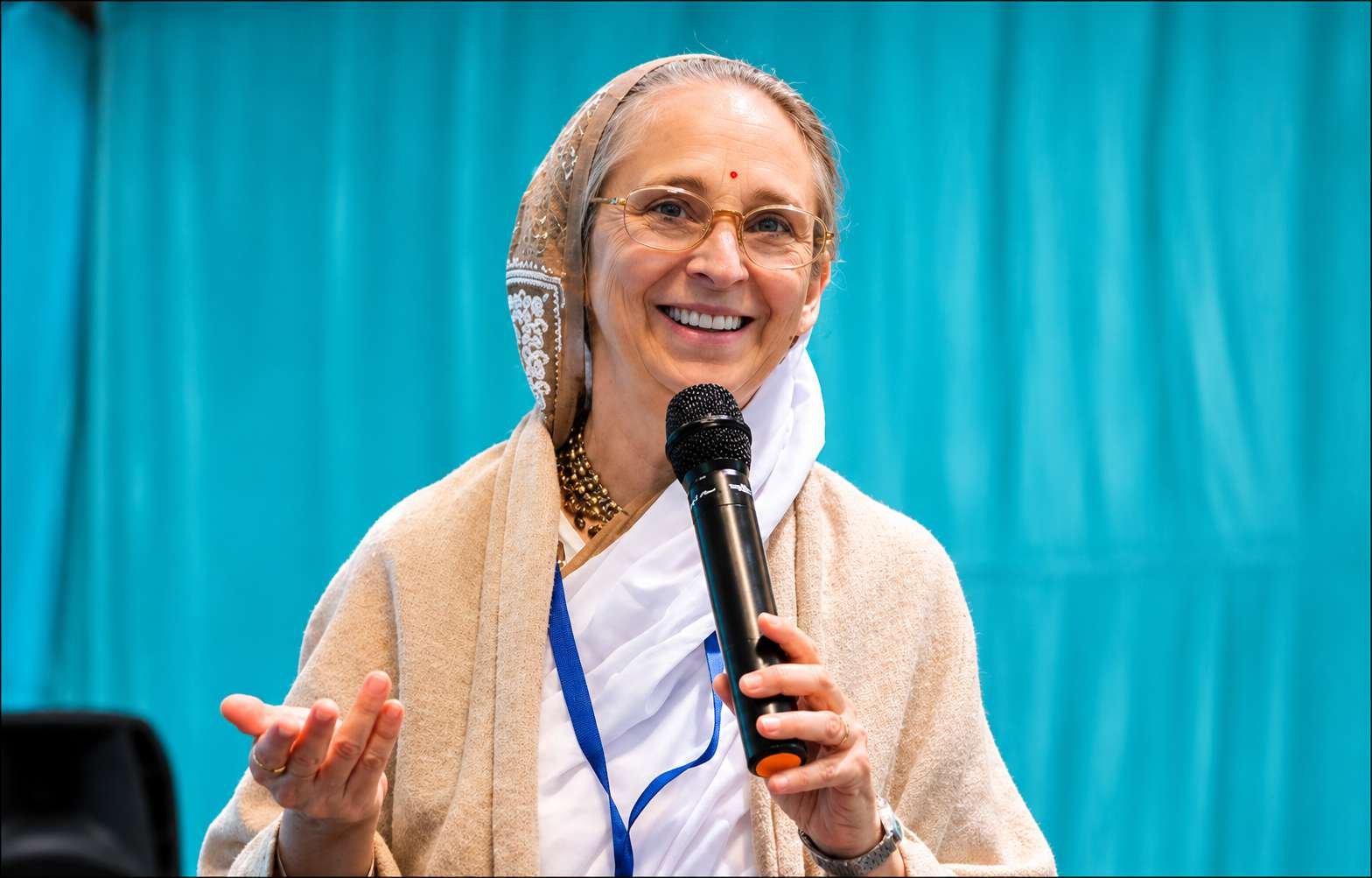
One of the most prominent educators in our movement, H.G. Urmila Devi Dasi, spoke on Training the Teachers: Instituting Best Practices in Educational Programs. With her personal anecdotes Mataji shared some of the concerns with regard to teachers in ISKCON such as “people not connecting with the real needs or concerns of the audience,” teaching courses “not crafted for long term retention” or “not crafted to facilitate application.” She stressed that Srila Prabhupada wanted us to know “something of everything” and “everything of something,” explaining that the “everything of something” is related to our specific service. If our service is teaching then we must know everything of the craft of teaching. Mataji also took the opportunity to showcase part of the online course that she has been working on with the Ministry to train teachers to teach. A dynamic, parallel, online presentation by the Ministry’s Russian Regional Representative, H.G. Tirtha Pavana Das was also shown history of academics from 19th to 21st century.
Starting from the culture of study established by Caitanya Mahaprabhu, and Acaryas such as Srila Bhaktivinoda Thakur, Srila Bhakti Siddhanata Saraswati Thakur, and Srila Prabhupada, Pranav Prabhu brought us to the present day when devotees in ISKCON are now working towards establishing a university to formally teach Gaudiya Vaishnavism.
H.G. Aniruddha Prabhu, talked about Every Temple – an Educational Oasis. Prabhu, who has been the extremely successful temple president for Melbourne for many, many years, shared that as a manager at first one is reluctant to invest in education because it appears to give no immediate returns, but he realized that his job as a Temple President was not just to ensure that there was money in the bank, but also to nourish the devotee
The following presentation was Varnasrama College for Vocational Training by T.G. Kalakantha Dasa and Samba Das. They highlighted that working with one’s nature can lead to abundant living and that we should be open- minded to exploring unconventional ways of teaching. They demonstrated the success of their program by the practical results they have achieved with working with the Gurukula boys who have been able to develop practical expertise in an astonishing variety of fields.
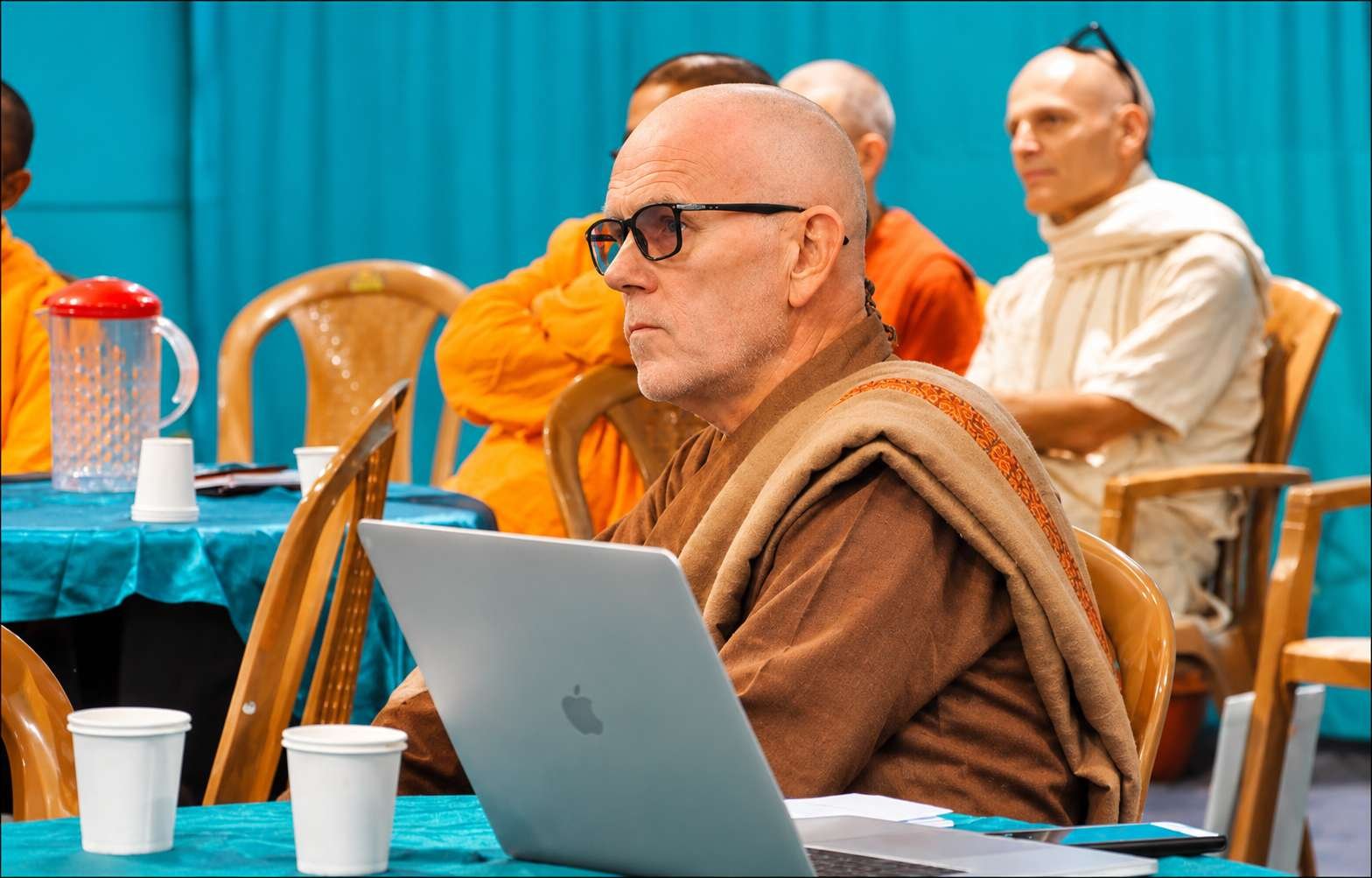
H.G. Srivas Das started the afternoon session with Enhancing the Culture of Reading Srila Prabhupada’s Books Globally. He stressed that the Ministry of Education wants it to be very clear that every educational program within ISKCON must have Srila Prabhupada’s books as their basis and emphasized that “every devotee in ISKCON should make Srila Prabhupada’s books his constant companion.” Continuing in a similar vein, H.G. Atul Krsna Prabhu spoke about redesigning the Four Sastric Degrees in such a way that they would be accessible to more and more devotees and they would get an opportunity to study Srila Prabhupada’s books systematically. He clarified that the Board of Examinations is currently in the process of developing a standard for the Sastric courses with particular emphasis on a having a unified method of assessment.
H.G. Gopal Bhatta Das and H.G. Kaunteya Das then spoke on Leadership Training, highlighting such excellent efforts as the GBC College, ILS (ISKCON Leadership Sanga) and SGGS (Sannyasi, Guru, GBC Sanga). Another personality involved in training leaders, H.H. Bhakti Rasayana Swami, spoke on Unsustainable Educational Culture, where he raised the question about educators in ISKCON struggling financially. He recommended that one way to circumvent this problem would be to develop ourselves as educators in such a way that devotees will be inspired to support us. Next, through a video presentation H.G. Radha Krsna Das spoke on Cultural Revolution through Education. He described the system developed in Hungary and discussed three main aspects – cultural revolution, Varnasrama college and starting with the Varna.
The final presentation of the day was again given by Urmila Mataji, who showed a snapshot of the project which is currently underway to develop a Sunday School curriculum. She described the need to have a curriculum that can be used all over the world and addressed concerns with which devotees conducting such sessions struggle – having multi-age children in a single class, lack of time or resources to adequately prepare etc.
Day 3 of the Symposium began with H.H. Hanumatpresaka Swami’ s presentation on Philosophy of Education entitled General Principles to Specific Application: The Encyclopedia to Carl Jung. He mentioned that the general terms in the philosophy of education could be linked to the Vedic understanding as Karma – education as information, Jnana – education as reason, Dhyana – education as intuition and finally Bhakti – learning to love wisdom. He emphasized that while all the elements are required steps in our schools, the aim of our education should be to reach the highest level, i.e. Bhakti.
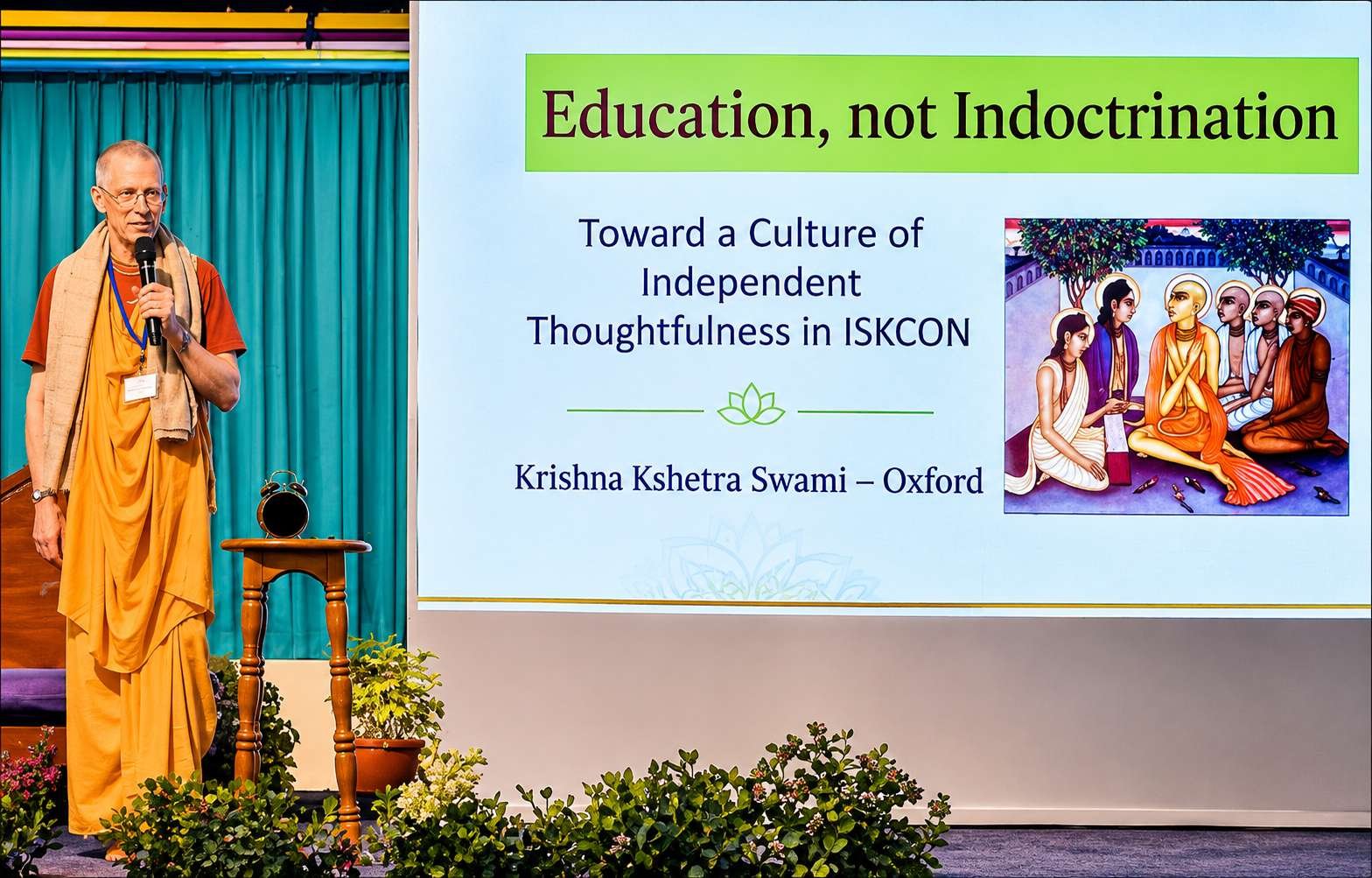
H.H. Krishna Kshetra Swami spoke on Education, Not Indoctrination: A Culture of Independent Thoughfulness suggesting that we should encourage devotees to write, ask questions, debate issues honestly, encourage diversity, conduct research, and philosophically speculate so that every devotee is able to go deeper into his understanding of philosophy. He pointed out that if as educators we are teaching “what to think” rather than “how to think,” we risk sliding into the realm of fundamentalism.
H.G. Gaura-krsna Prabhu spoke on Unity within Diversity – Creating a Synergetic Education Ecosystem. He noted that for education to be effective, various aspects should work in sync such as developing a philosophy of education, a scientific theory of education, deliberating on the methodology, and having the proper physical facilities and environment.
H.G. Tapan-mishra Das gave a presentation on the Projects and Plans of the Ministry. The structure of the Ministry was detailed and descriptions given of various initiatives underway such as curriculum development, school standards and philosophy of education. The educators present were once again forebodingly urged to come forward and help the Ministry to take these initiatives forward or suffer the consequences.

H.G. Gauranga Prabhu – Tertiary Education – Top Down Approach. Based on his research on tertiary educational institutes established by other religious organizations, he stressed that ISKCON too urgently needs to give focus on this aspect of education. It begins with training devotees to become teachers in institutions at this level, universities. He explained how such a university could offer courses from a Vaishnava perspective which would interest people from the secular world. Another personality connected with tertiary education, Professor Louis Filipe discussed Entrepreneurship in Education, citing the Lusophone University in Portugal as a case study. A presentation related to education for ISKCON Youth was given H.G. Sundar Gopal Prabhu’s team demonstrating the innovative preaching initiatives undertaken by ISKCON Delhi to introduce thousands and thousands of young people to Vedic philosophy and culture including massive, colorful cultural rallies.
H.G. Champakalata Mataji spoke of the Ministry’s project on setting standards for ISKCON schools. She stressed on the need for improving the quality of education in our schools and mentioned some of the parameters which should be considered for establishing a school or elevating the level of ones that are already running.
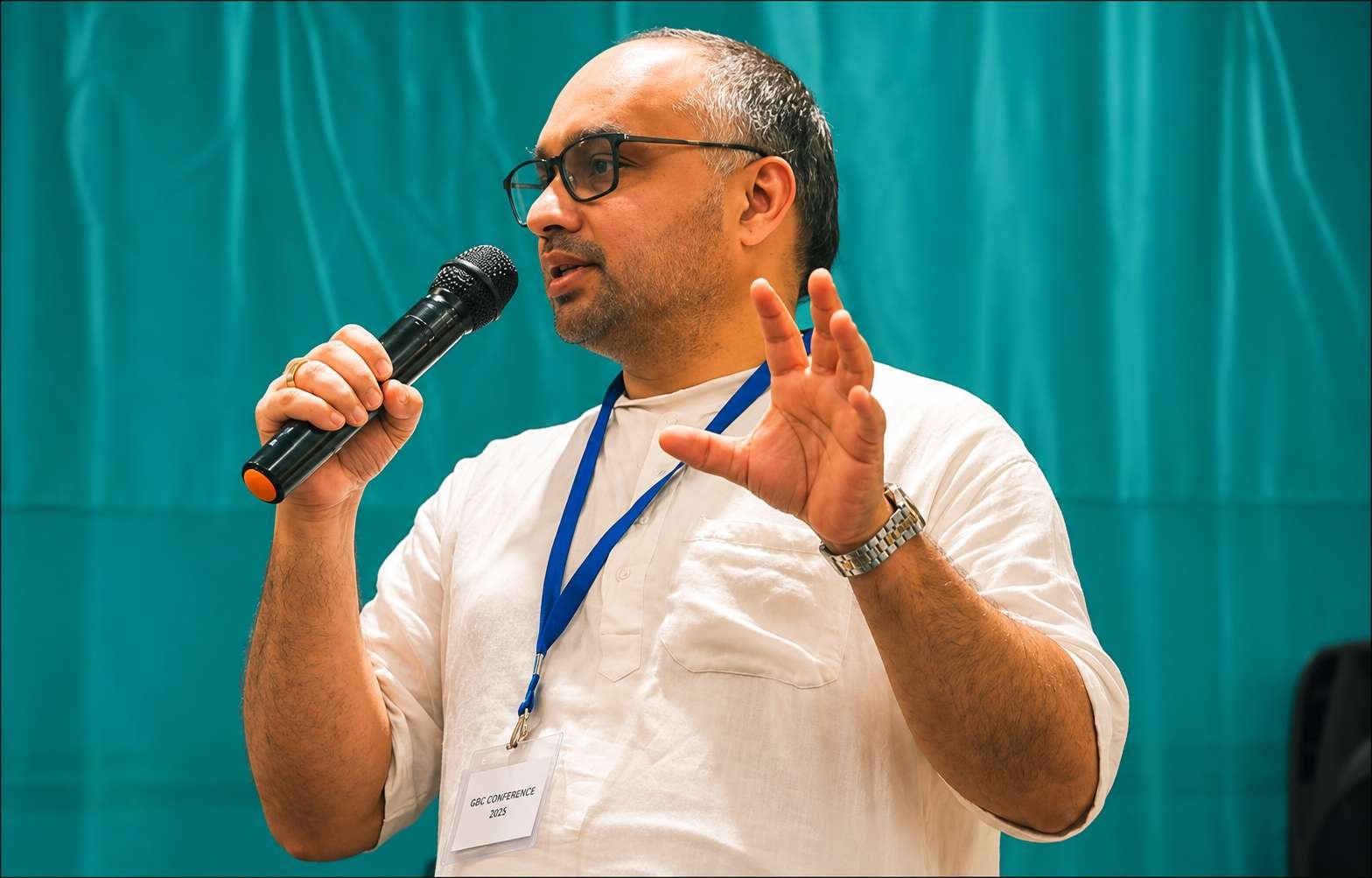
H.G. Balimardan Prabhu – Penetrating the secular Educational system with the sword of Bhagavad Gita As It Is. A case study from North America. The strategy adopted in North America of approaching large publishers of textbooks such as McGraw Hill and Discovery, and convincing them to include text from Srila Prabhupada’s Bhagavad-gita. In this way hundreds of thousands of students will be exposed to Gaudiya Vaishanava philosophy.
Another organization actively working towards conveying Srila Prabhupada’s message in a secular context is The Avanti Schools Trust. Usha Sahni Mataji described the successful Educational Developmental Models, Building Inclusive Partnerships at Krsna Avanti Schools, and explained that the factors that worked in their favor to expand were that they were not only teaching the complete national curriculum but in addition Sanskrit and a customized curriculum of Krsna consciousness philosophy and ethics.
Interestingly, the next presentation was based on Gurukula education and served to highlight the diversity in approach which is inherent in ISKCON’s culture. H.G. Prananatha Prabhu, H.G. Acintya Swarupa Prabhu and H.G. Balarama Prabhu spoke on Vedic Education. They shared their experiences of teaching and studying at the world renown Bhaktivedanta Academy in Mayapura, and emphasized the practical approach of Vedic education, particularly in building character and producing dauntless leaders for ISKCON.

H.G. Pancharatna Das electrified us with Online Education – Good, Bad and Ugly. He explained the ‘good’ benefits of utilizing the internet for training and warned against ‘bad’ implementation or ‘ugly’ design which would completely defeat the purpose. H.G. Prana Prabhu drove the point home regarding online trainings with a video – E-learning Insights. He urged devotees, “Don’t miss the bus!” and practically demonstrated some features of an effective online course.
Sessions ended withthe Vote of Thanks by H.G. Tapana-mishra Das and the participantsappreciating the efforts of the organizers with a roaring and prolonged applause. All the presentations had been followed withactive participationand questions were asked by both veteran and young, aspiring educators. The discussions were very fruitful as they opened spaces for innovative thinking and questioning. The presence of sucha variety of experienced educators to answer questions made the conference very cogent and practical. Overall, it was a very, very inspiring, well-organized conference, and participants left feeling enlivened and encouraged to approach their service foreducationin ISKCONwithrenewed vigor. The recordings of all the sessions will shortly be available for viewing on the Ministry’s website. More photos of the symposium can be viewed here. The tentative dates for the next symposium are 20th and 21st Feb, 2020. Please let us know if you would like to participate or volunteer for help in organizing.



ISKCON SASTRIC DEGREES SYMPOSIUM
By Atul Krsna Das BOEX Chairman
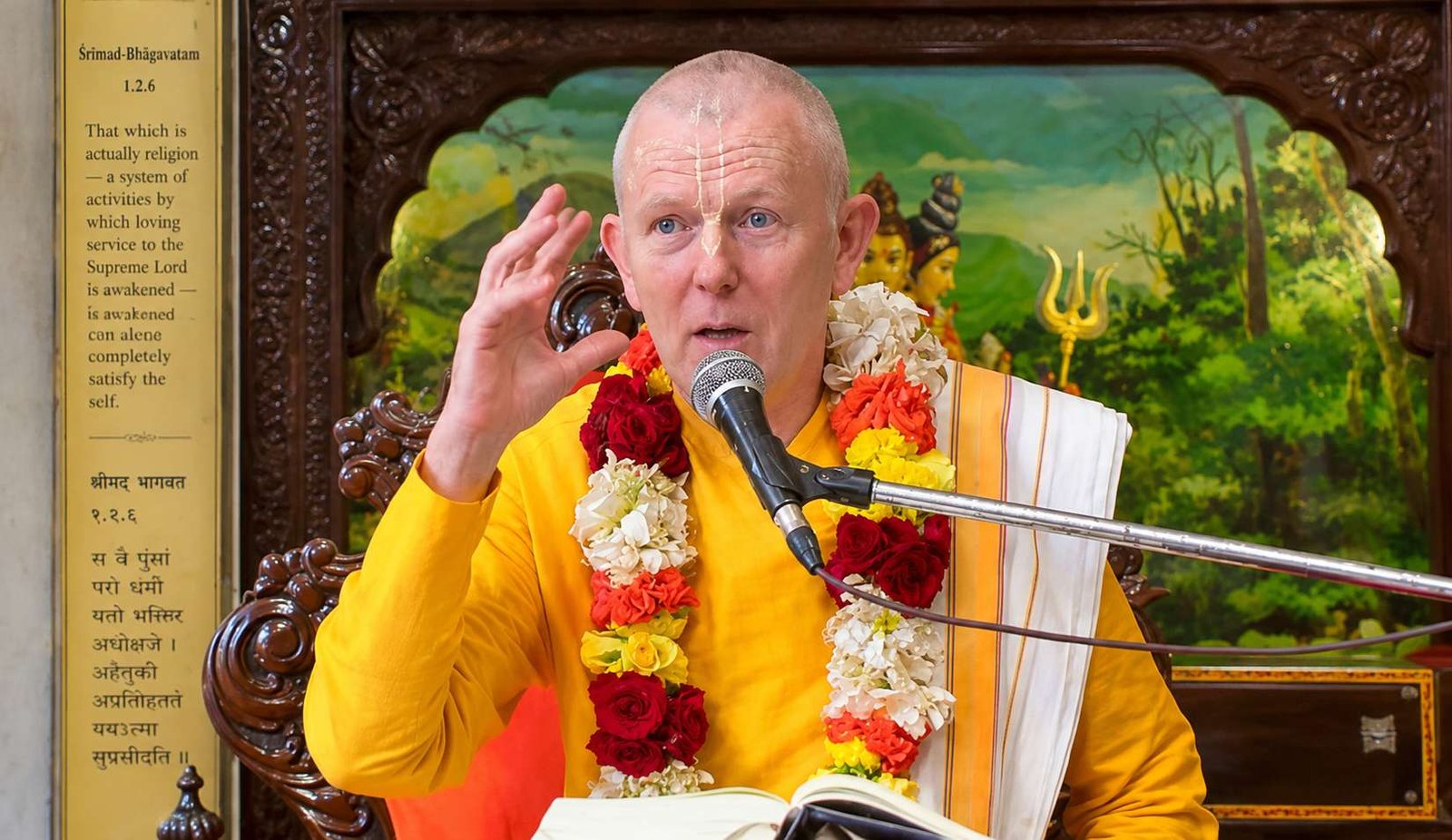
Members of the ISKCON Board of Examinations, and other Sastric Educational luminaries, recently met in Pune to review the current standards for the Four Sastric Degrees established by Srila Prabhupada. The symposium participants included H.H. Hanumatpresak Swami, Prashanta Devi Dasi, Adi Purusa Das, Vamisvadan Das, Balgovind Das, Gauranga Darsan Das and Atul Krsna Das.
The team first formulated Purposes of the Degree program and identified Targets such as helping students to:
- Develop analytical, interpretive and evaluative Sastric application skills.
- Cultivate a spirit of selfless, steady, cooperative and productive service.
- Practice quality devotional Sadhana and deepen Vaishnava qualities.
- Cultivate genuine compassion towards all living beings.
- To help devotees understand, appreciate and perpetuate the mood and mission of Srila Prabhupada.
- To help devotees meet Srila Prabhupada in the pages of his books. etc.
After clarifying the purposes of the Sastric Degree Program, team members then identified specific Learning Outcomes for each degree, these specific learning outcomes becoming progressively more developed as students proceed through the respective degrees.
On the basis of these specific learning outcomes the team is now preparing assessment (open and closed book essays etc.) to measure the individual’s achievement of the respective learning outcomes. These assessment questions will enable global standardization of the degrees and also accommodate various teaching approaches such as classroom, blended and online. The team is planning to launch the new system by ILS 2020.


ISKCON MINISTRY OF EDUCATION’S TECHNOLOGY PLATFORM
By Indira-sakhi Devi Dasi

After several months of effort, the revamped website of ISKCON’s ministry of education https://iskconeducation.org/ is ready to be used by devotees for their educational needs. It is still in the beta testing phase, which in simple words means that there may be minor glitches or errors. Nevertheless, we encourage devotees to register and explore the various features that are being offered. To aid navigation of the website, a brief description of the various sections is given below.
- About Us – This section provides information about ISKCON’s ministry of education – its vision, mission, organizational structure, etc.
- Journal – This section allows the users to view and download all the issues of the ministry’s journal, Viplavah.
- Educators – This is the section where we would like devotees involved in education to enter details
so that they can be saved in our database. This may be done in 3 ways.
-
- Individual educators can enter their details.
- Institutes such as ISKCON schools or Sastric education institutes can enter their details.
- Programs such as Sunday Schools, summer camps or Bhagavad-gita study groups can enter their details. This section also allows this information to be searched by users. This means that if a parent is looking for an ISKCON school in a particular geographic location for their child, we will be able to provide the relevant details to them. Therefore, we request devotees all over the world who are serving in the field of education to kindly input their details, so that we can have a central database for ISKCON’s educators and educational initiatives.
- Library – Due to the hard work of H.G. Kartamasa Prabhu, H.G. Nataka-candrika Mataji and H.G. Radha
Damodara Prabhu, we are pleased to offer an extensive resource library of Krsna conscious material which can be used by parents and teachers to develop innovative courses to teach Krsna consciousness. A word of caution: Some of the material may be copyrighted, therefore, we request devotees to use their discretion and utilize such material only for their private use. We also request devotees to help the library grow by uploading more material.
- Discussions – This section provides a space for devotees to enter into discussions about various topics related
to education in ISKCON. Devotees can start threads of discussion and other devotees can comment on it.
- Events – This section allows devotees to view upcoming events related to education. It also has a facility where users can upload events.
- Volunteer – This section provides information about the various initiatives the Ministry is undertaking
and invites devotees to participate or contribute to them.
Many of the features mentioned above, such as uploading events or starting discussion threads, are only
available to users registered on the website. Therefore, we request devotees to take a few minutes to complete the registration form, so that they can fully utilize the services offered by the website.
We have ambitious plans for the website, including offering online training and video news updates.
However, we are constrained due to a lack of resources. We would be grateful if devotees familiar with web development would kindly come forward to help us in this service. Education is one of the most important aspects of any society and in this day and age, the internet can play a major role in fulfilling this need. We hope this website will develop to be the one-stop shop for everything related to education within ISKCON. But this can only be possible with cooperation of the devotees from all over ISKCON. We seek your support and blessings to make this endeavor a success.


CALL FOR PAPERS – ISKCON PHILOSOPHY OF EDUCATION BOOK
By Tapana Mishra Dasa
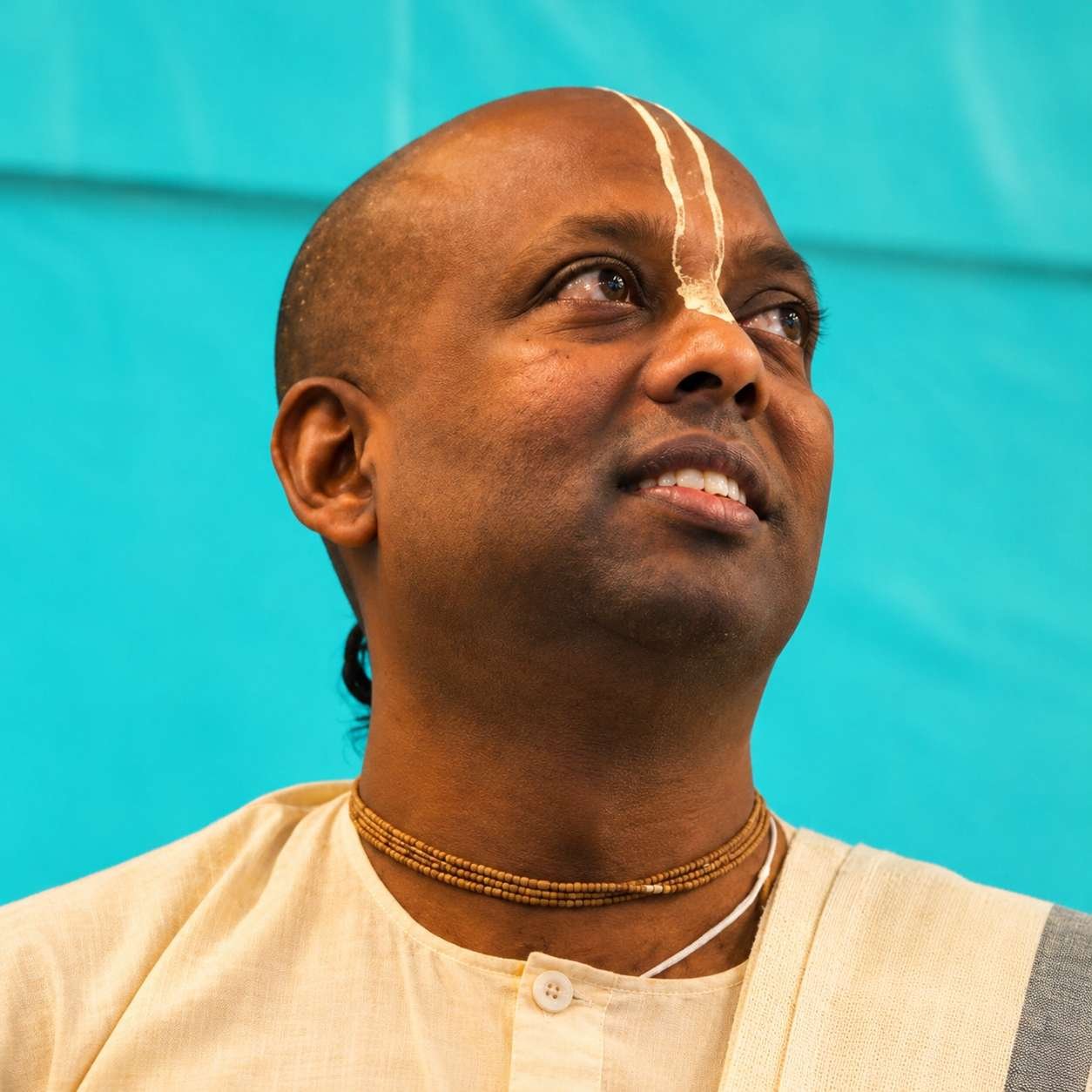
BACKGROUND
For over 50 years the devotees of ISKCON have undertaken educational initiatives under the inspiration of His Divine Grace Srila Prabhupada. While all such efforts are glorious, most of them have not been driven by an explicitly stated philosophy of education. It is important that education within ISKCON is guided by a proper philosophy
of education, otherwise we may be deviating from Srila Prabhupada’s vision. In this regard the ISKCON, Ministry of Education felt that there is a pressing need for ISKCON to compile ISKCON philosophy(ies) of education. While acknowledging the diversity which is an inherent part of ISKCON, we accept that there may be more than one philosophy of education, but at the same time there must be some fundamental principles that unify them all. By no means is this going to be the final effort on this topic for the next 10,000 years. Rather it is a sincere attempt to produce what the current educators within ISKCON feel the philosophy of education should be, based on the understanding they have developed by studying Srila Prabhupada’s instructions on this topic and applying it in their respective educational efforts. Every 3 to 5 years reflections should be churned to build on this effort. This document is meant to be an introduction to how the project would evolve. It includes the overall project schedule with specific deadlines for each milestone, terms of reference, followed by illustrative aims of education shared by Rasamandala Prabhu and ending with a request for devotees to participate in various capacities.
Project Schedule
| ACTIVITY | DEADLINE |
| Those who are willing to submit an article, must send a letter of intent to the Ministry of Education stating their interest to write an article to along with a short write up on their service within ISKCON and statement of purpose as to why they want to undertake this service. | 15 May 2019 |
| Project team to specifically acknowledge and confirm back to the devotees who have expressed willingness to participate. | 30 May 2019 |
| Ministry of Education project team to publish guidance on the article style such as – a style-sheet, specifying how references are to be made and standards for spelling, punctuation, the use of diacritics or an alternative (and specified) phonetic notation; | 30 May 2019 |
| Call for papers on ‘ISKCON Philosophy of Education’ from devotees around the world. All submissions must happen within this period | 15 August 2019 |
| Editorial board to review the submissions, seek clarifications from authors, (probably) come up with a summary and conclusion | 30 September 2019 |
| Some assigned members of the team to hold face to face discussions during Kartik in Vrndavana. | 31 October 2019 |
| Depending on the outcome of the above discussions, the team to undertake the | February, 2020 |
| At our International Education Symposium in Sridham Mayapur | |
| Preparation of book and publish it at least electronically. | |
TERMS OF REFERENCE
The essay should respond to all or some of the following questions:
- What i s ISKCON’ s Philosophy of Education?
- What is the meaning of education?
- What should be the goals of education?
- What is an educated person?
- What values, skills and knowledge should students learn?
- What are the guiding principles around which ISKCON should develop i ts educational initiatives and strategies?
- What values should be prevalent through any educational program?
- Should ISKCON education focus only on theology and philosophy or should it be multidisciplinary?
- W h a t t e a c h i n g a n d l e a r n i n g methodologies (i.e. contemporary, traditional, alternative etc.) should be used or rejected?
- To what extent should ISKCON draw from educational approaches or methods used by other religious or secular institutes?
- To what extent education should be classical Vedic or adapted to contemporary audiences?
- Should education be teacher-centred or student-centred?
- What is the role of research and publishing in education?
- Day schools vs. Boarding schools
- Consideration of placement of students within society after completing their education
- Potential writers could suggest further topics, beyond these listed; and which might be accepted at the discretion of the book’s editors
Maximum word limit: 5000 words
Article must include references, either from devotional literature or academic sources (or both). This will ensure a high-standard of scholarship (consistent with our heritage), while also accommodating a wide range of perspectives (that are expressed with a degree. of justification)
Authors may of course cite education experts in general, but they themselves should be strictly following Srila Prabhupada’s basic standards for initiated disciples (i.e., four regulative principles and 16 good rounds daily)*. Of course this requirement can be adjusted according to the practical, common sense decisions of the Editor.
AIMS OF ISKCON EDUCATIONAL SYSTEM
The foremost aim of any educational system should be to fulfil the order of His Divine Grace Srila Prabhupada and develop Krishna Prema. Yet at the same time, the papers should address this issue by reflecting on some considerations as stated below to help establish respect for ISKCON Educational initiatives within the larger society.
- Raise the status of ISKCON education, asserting its key role in societal leadership
- Help nurture a community of devotee educators and educationalists
- Promote dialogue between ISKCON educationalists and ‘outsider’ colleagues
* “In the modern system of education the teacher’s academic qualification is taken into consideration without evaluation of his moral life.” (SB 1.9.26 purport).
“In this Kṛñṇa consciousness movement we require everyone to rise early in the morning, by four o’clock, and attend maṅgala-ärati, or morning worship, then read Śrīmad-Bhägavatam, perform kīrtana, and so forth. Thus we hold continuous activities in devotional service twenty-four hours daily.” (Nectar of Instruction, Verse 3, purport).
- Raise the standards in ISKCON-backed education
- Enable ISKCON to positively contribute towards the education world
- Promote reflective engagement between theory and practice
- Encourage ISKCON educationalists to research, write and publish
- Bring together various interest groups to promote a more collaborative, mutually-beneficial approach to education
- Encourage the development of a strategic approach towards education.
REQUEST FOR PARTICIPATION
The team sincerely prays to Their Lordships that many of the dedicated educators within ISKCON from different parts of the world would come forward to submit their contribution for this important project. So please do submit your interest for writing an article by 30th April. The ministry would require several volunteers who could assist in proof-reading, editing, layout, communicating with writers who express interest to submit an article, and so on. If you feel inspired to participate in this project in any capacity, then please write to us at viplavah.iskcon@gmail.com stating your area of interest.
Your servant,
Tapana Mishra Dasa (Executive Director)
On Behalf of the team:
H.H. Hanumatpresaka Swami,
H.H. Yadunandana Swami,
H.G. Bal Govinda Dasa,
H.G. Bhakta Chetan Hazaree,
H.G. Indira Sakhi Devi Dasi,
H.G. Gopika Radhika Devi Dasi.

BHAKTIVEDANTA MEDICAL ASSOCIATION HOLDS 5TH ANNUAL CONFERENCE
ISKCON Houston hosted 100 medical p r o f e s s i o n a l s a t t h e Fifth Annual Bhaktivedanta Medical Association (BMA) conference January 18-21, 2019. H.H. Romapada Swami originally encouraged Prema Vilas Dasa from Columbus (Ohio, USA) to organize an annual retreat for medical professionals practicing or interested in Krsna consciousness, to enhance their Krishna consciousness, to assist one another in serving Srila Prabhupada, and to expand Krishna consciousness among medical professionals.
BMA thus offers a forum for devotees within the medical field to network year-round, meet annually for fellowship, become better devotees and medical professionals. It helps medical professionals integrate their spiritual life with the demands of their professions. The Association strategizes on how medical professionals can best serve ISKCON, Srila Prabhupada, and devotees in USA and inspires more medical professionals to take up bhakti.
Unlike previous conferences at farm communities in Gita Nagari & New Vrindavan, which were retreat-oriented, Houston’s program was more like an academic conference with several uplifting Swamis, & attendees earned continuing medical educational credits, through University of Texas Medical Branch.
The meeting began with a dance by the Natya Lila Center to a fusion of Eastern & Western music, in line with the conference theme: “East Meets West: A Holistic Approach to Health.”. HH Bhakti Marg Swami, a long-standing BMA supporter, presented “Tales from Trails: Putting Heart and Feet towards a Car-free, Care-free Lifestyle”. The keynote, “Life’s By Guru-bhakti Devi Dasi Final Exam: Death and Dying from a Vedic Perspective”, was delivered by HH Giriraj Swami.
- Talks on the scientific basis of meditation were presented by: 1) Dr Alejandro Chaoul (MD Anderson Cancer Center), 2) Dr Randeep Suneja and 3) Vinay Gauranga Dasa, presenting his research on “Mantra Meditation in Metal-encephalography”.
- Dr Manuj Kapur presented “Rationing Health Care”
- “Ayurveda – a catalyst for Modern Life” by Anantheswar Dasa
- “Intermittent fasting” by Hari Raman Dasa,
- “Physician Burnout” by Prasannatma Dasa, Director of BMA.
- Jayshri Radhe Dasi talked on Microbiome,
- Bhagavan Dasa (RN) on “A glorious passing”,
- “Coordinating Care for the Whole Patient” by Jayna Patel (RN).
Panel discussions focused on mental health implications on spiritual and physical well-being, moderated by Nanette Tashnek MSW, D.PSc. A teen panel addressed challenges facing teens moderated by HH Rtadhvaja Swami and gender disparity & the # MeToo Movement.
Ujjvala Rasajna Dasi discussed presenting Bhagavad Gita to hospital HR departments to reduce staff stress. She shared her experience & resources which allow devotees to carry out the initiative in the hospitals they serve.
Karunamayi Dasi, demonstrated Ayurvedic cooking & Dr Baxter Montgomery spoke on Veganism. Devotee-centered topics included an overview of Eastern spiritual literature & a Krishna conscious version of Jeopardy, the TV show.
Early morning Yoga sessions were offered by Eric Tolentino & Lakshmi Lobue, a second-generation devotee. Shorter interactive Yoga, Meditation & Pranayama demonstrations were conducted by Yamini Bhatt and Anil Singhal MD.
Overall, feedback from attendees was overwhelmingly positive with most likely to return next year. Sheila Griffin, RKT, LMT, said, “Overall this was the best medical conference I have ever attended. After the conference I felt so uplifted & inspired. Similarly, Dr Ramachandra Malya opined, “It was an excellent Continuing Medical Experience (CME) conference with a holistic approach for uplifting body, mind & soul”.
Members voted to have more devotee centric topics, increased opportunity for sanga, a lighter schedule and no CME for future meetings. BMA voted to have their next meeting in Houston again Jan 17-20, 2020. Please visit https://www.facebook.com/ISKCONBMA/ for updates.
Also, first become healthy and then Sankirtan. How can we as medical professionals come together and make an impact on the world eg. start identifying and publishing in important medical areas.
 NORTH AMERICAN REGIONAL REPRESENTATIVE REPORT
he strugging North American Zonal Representatives Committee i s constituted of Balimardana Das (Iskcon San Jose, Calfornia), Gopi-gita Dasi (Iskcon Dallas, Texas), Visvambara Das (Iskcon Alachua, Florida) , Rama-giridhari Das and Hanumatpresaka Swami. Respectively they are working as:
- Bali – Convener and Sastric Education,
- Gopi – Sunday School Development,
- Visvambara – Primary and Secondary Schools,
- RGD and HPS – General Consulting.
Our monthly meetings happen about half the time but we will solve that defect. Bali and HpS along with Ananta-rupa Das, Temple By Bhakta T. Brown president in Boise, Idaho, attended the MOE conference in Mayapura. Following is a killer article by Gopi-gita Dasi. There is pretty good connection with Sesa and Tapan-misra Prabhus and the Zonal Representatives. By Krsna Bhakti they will develop the utility of their position. Contact them about their specific areas through the Viplavah address herein. All of them have very, very heavy work-loads in personal life, community life and their own educational efforts, but if you contact them we expect you will encounter a mine of resources. Gandharva Das has been nominated by local devotees as Regional Representative for Ecuador, Peru, Bolivia in South America and in good communication with Tapan Misra and taking on first complaints.


A HIDDEN GEM IN YOUR COMMUNITY:
By Gopi Gita Schomaker, Vice Principal, TKG Academy
If you regularly visit a Krishna temple or community, I have a challenge for you. Among the arati performers, the kirtaniyas and guests, I ask you to find a hidden gem. This unsung hero may be a woman or may be a man, old or young, a parent or not, a devotee for months or years, but I challenge you to find this hero. Do it soon.
It will be difficult to spot her. She won’t be in the temple-room during the main program. Walk down the hallway and listen for children’s laughter. She may be in a corner room, with piles of donated clothes in one corner, and a makeshift cabinet with a broken lock in another. This room may or may not have a colorful rug, wooden chairs for children, or easy-to-clean tables for work. Regardless of what the room holds, this sacred place is her refuge, and is where she finds that Krishna is close.
You may see her managing the needs of twenty or more children. She will be introducing ancient Vedic texts in a way they can understand: by role-playing dramatic narrations of Vedic personalities, impressing upon children to bring out their humility and tolerance; or by directing a craft to take home. She knows that happy childhood memories make a lasting, life-long impact by bringing about greater social connectedness, enhanced self-confidence and healthy behaviors.
This sheer responsibility compels her to takes her service very seriously. Unfortunately, she may also have seen how negative childhood associations have affected her adult friends. A few shudder at holding japa beads, which became a source of harsh, rebuking words by parents, if done incorrectly. Others have completely rejected Krishna’s communities, hating their upbringing. Their
memories are of sitting through complex lectures against their own will, shushed continuously and feeling like a nuisance in God’s home. If those who profess to love Him don’t love His children, what kind of God would He be? So, she whisks away the children to what will be their sanctuary, engaging them in exciting learning. During prasadam time, she’s probably skipping her meal to reorganize the supply cabinet: closing glue bottle lids, washing paint brushes, or restacking the scrap paper, so as to not waste a penny. Immersed in financial worry, she may feel guilty about using her personal family’s money to purchase these supplies, foregoing her son’s need for a new sweater. As she continues to organize, she may be secretly wishing for more help. But for every moment spent, she feels that Sri Gauranga Himself, is smilingly watching. Had He not, Himself, been the caretaker of children, even the principal of a school, teaching logic and grammar by only relating it to Krishna. Though He was ridiculed and doubted, He knew the importance of teaching the young generation, opening His school even before He inaugurated the sankirtan movement. As she remembers His sweet pastimes, she knows He will take care of her needs.
You may find her surrounded, at other times, by children who have flocked to her side out of love. When they’re struggling with peers, or about to be lauded for success, they immediately think of their Krishna teacher, even when out of the classroom. Later on, as young adults, when they find themselves wondering whether or not they should smoke the joint just passed to them, they will remember their Krishna teacher. In their 20s and 30s, when faced with big life decisions- which is the best job and will this person make a good life partner – guess who comes to their minds? The sweet Krishna teacher who ignited a fire of love for Krishna in their hearts while exhibiting the best possible qualities.
Perhaps you’ve been unable to find her, as she may be deliberately hiding now, playing catch up on her daily japa. “Time I am,” Krishna consoles in the Gita, yet time is her never-ending source of stress. In addition to practicing her sadhana, managing her family’s meals, appointments, clothes and emotions, finding enough time feels out of reach. But in the same Gita, Krishna also promises, “For one who explains this supreme secret to the devotees, pure devotional service is guaranteed, and at the end he will come back to Me. There is no servant in this world more dear to Me than he, nor will there ever be one more dear.” These words of His give her strength and trust that one day she will find the right balance.
When you do finally find her, you won’t be surprised to see her. She is your community’s Sunday School or Gurukula Teacher. Please remember, you are meeting a great sage. Take her aside, offer her a chair and speak these gentle words: “Thank you for caring for our children. Thank you for your sacrifices, your time, your earnestness, and your struggles. I am here to help you and am at your service. Tell me what to do.”
Then, gather everyone you know, the arati performers, kirtaniyas and guests, as well as parents and non-parents alike! Let them know about her hidden glories; remind them of her sacrifices! Ask them for a donation, and send her on an airplane to the ISKCON Ministry of Education conference in June at New Raman Reti Dham, Alachua. There, she will re-energize, share her triumphs and challenges to other kindred souls who are engaged in the same service in temples and communities across North America. She will get tips of lesson planning for the multiple levels, advice on classroom management, most importantly, strategies on how to cement the identities of her students. Your indirect service, and her direct service will someday manifest as children who will not only surpass their peers with their inner confidence, but who will also know how to connect any adult they come in contact with, to the Supreme Personality of Godhead, Sri Krishna Gauranga. “These children are the future hope of our society.” Srila Prabhupada (Letter to Satsvarupa, New York 11 April, 1973)
CALENDAR OF EVENTS |
| May 18th 2019 – Lil’ Krishna Fest; Fremont, California; http://www.bc4he.org/events.html June 27–30th 2019 – 6th Annual ISKCON North America Education Conference, New Raman Ret-dhama – Alachua, Florida. This year’s conference is specifically focused for those who serve in primary schools and Sunday schools. This will be a great opportunity to interact with fellow educators from throughout North America and to learn best practices from peers and subject area experts. Registration started January 2019 at www.iskconedcom. Questions regarding the conference, travel and accommodations can be sent to the event organizer – Visvambhara Dasa at d.aguilera@bhaktischool.org .July 13-14th 2019 – Krishna Home School Convention , ISKCON Chicago. http://iskconchicago.com/krishna-homeschool-convention/.
Jan 17-20th 2020 – Bhaktivedanta Medical Association 6th Annual Conference, ISKCON Houston, Texas. Please visit https://www.facebook.com/ISKCONBMA/ for updates. |
NEXT ISSUE |
| Will close for submissions by 13 June, Pandava-nirjala-ekadasi, and be released about a week later. Your contributions will go out to over 1,000 educators world-wide and make a change in the progress of Kali-yuga. |